
Wide Dives into Difference
As a speaker of several Asian languages, a historian, and a curator with a global career spanning roles at world-renowned institutions such as the Victoria & Albert Museum and the Smithsonian, Thomas Wide is certainly not indifferent to difference.
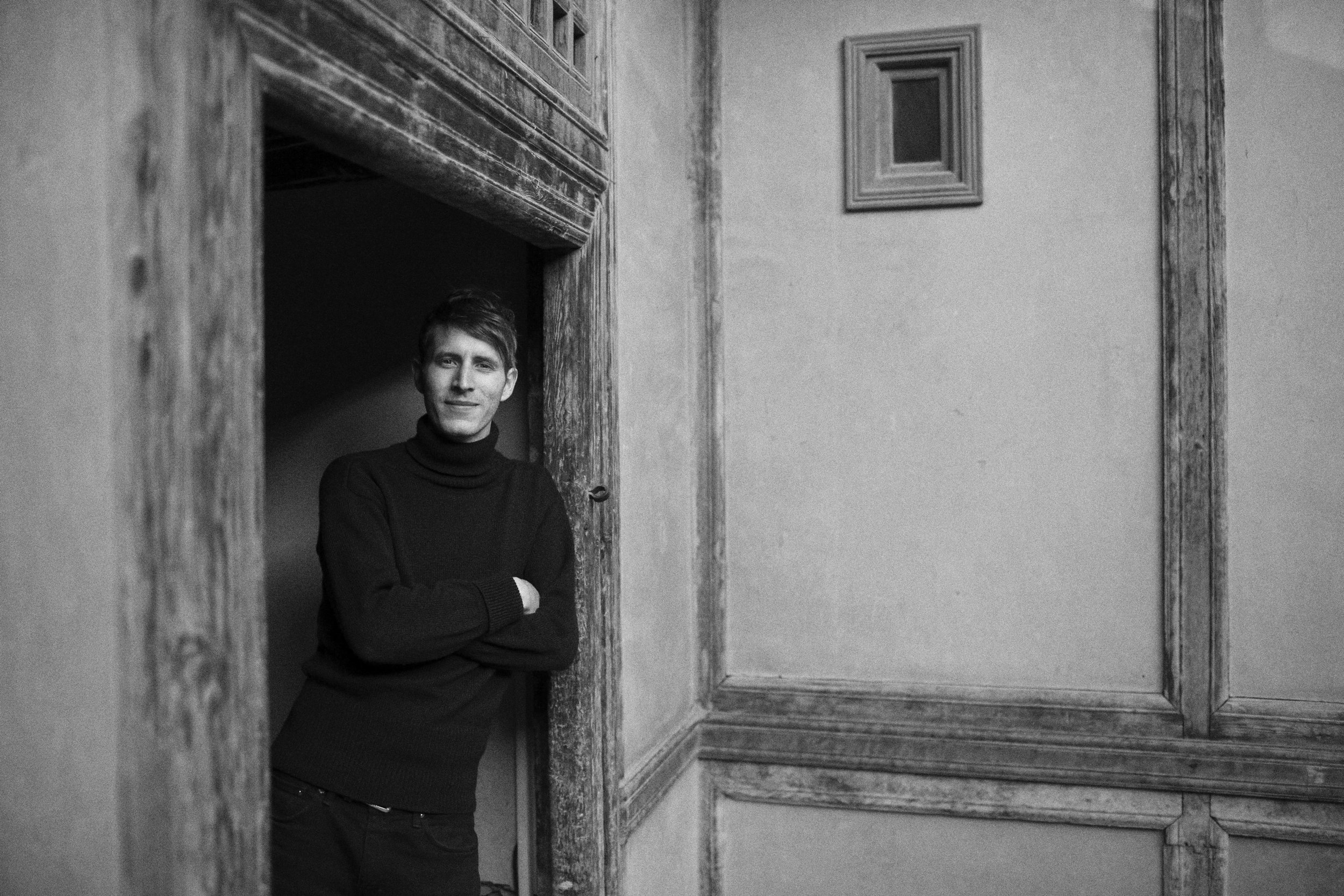
Running towards the unknown: Discovering difference
Wide describes himself as “a Midlands boy”. “I grew up in a small village in the East Midlands; my upbringing was very parochial.” He was 17 during 9/11. “It hit me very hard – [I had] an intense sense of unknowing — there were these other cultures in parts of the world that had completely different views. I had this strong sense of what is going on?”
“I wouldn’t have been a very good hunter-gatherer,” Wide reflects. “If I hear a rustling in the undergrowth, as a general rule, I go towards it, rather than away from it.”
Accepted into Oxford University to study Classics, Wide requested to switch to a course that would also enable him to study Arabic. He spent the next few years “seeking out what [he] didn’t know” in an attempt to understand it better. Wide studied Arabic in Cairo and Damascus then moved to Afghanistan after graduation, where he volunteered at the cultural heritage charity Turquoise Mountain. During that time, he made close friendships with many Afghan artists there.
Standing in the Wakhan Corridor, the northeast corner of Afghanistan where the knot of the Pamir Mountains comes together, Wide recalls feeling struck by another moment of unknowing – here he was, learning about Afghanistan, but there, right in front of him, was China. “I hadn’t realised that Afghanistan bordered China, and it really surprised me. I remember looking across and thinking, I need to learn about China.”
Wide continued studying, learning about Islam and China on a scholarship at Harvard, and returning to Oxford to complete a DPhil. At the same time, he continued his work with Turquoise Mountain, living in Afghanistan for a few years and eventually running the charity.
Bringing Afghanistan to Washington: An experiment in difference meeting difference
Approached by the Director of the Smithsonian Institution’s National Museum of Asian Art, Wide took on a position at the Smithsonian as a guest curator and agreed to co-curate an exhibition on Afghan art with four of his artist friends. Wide travelled to Washington D.C. every few months to bring Afghan art to the American capital, and Turquoise Mountain: Artists Transforming Afghanistan launched on 5th March 2016.
The Smithsonian often receives footfall outside of those who might be considered traditional museum-goers due to its position as a free museum complex in the American capital. On their visit to the institutions of state, international and domestic tourists sometimes “stumbled” onto the exhibition “without prior expectations”; “for some, this might be their only museum visit for 1, 5, or 10 years”. “I saw, multiple times, people having really surprising experiences… I felt like we had the chance to change people’s minds.”
Realising the exhibition’s potential for impact and wanting to continue “the meaning-making” of the show after its opening, Wide often spent up to an hour a day engaging with visitors on the exhibition floor. “It was probably surprising to the visitors that they were being approached by the curator, but I loved it… [those conversations were] so meaningful and powerful for me.”
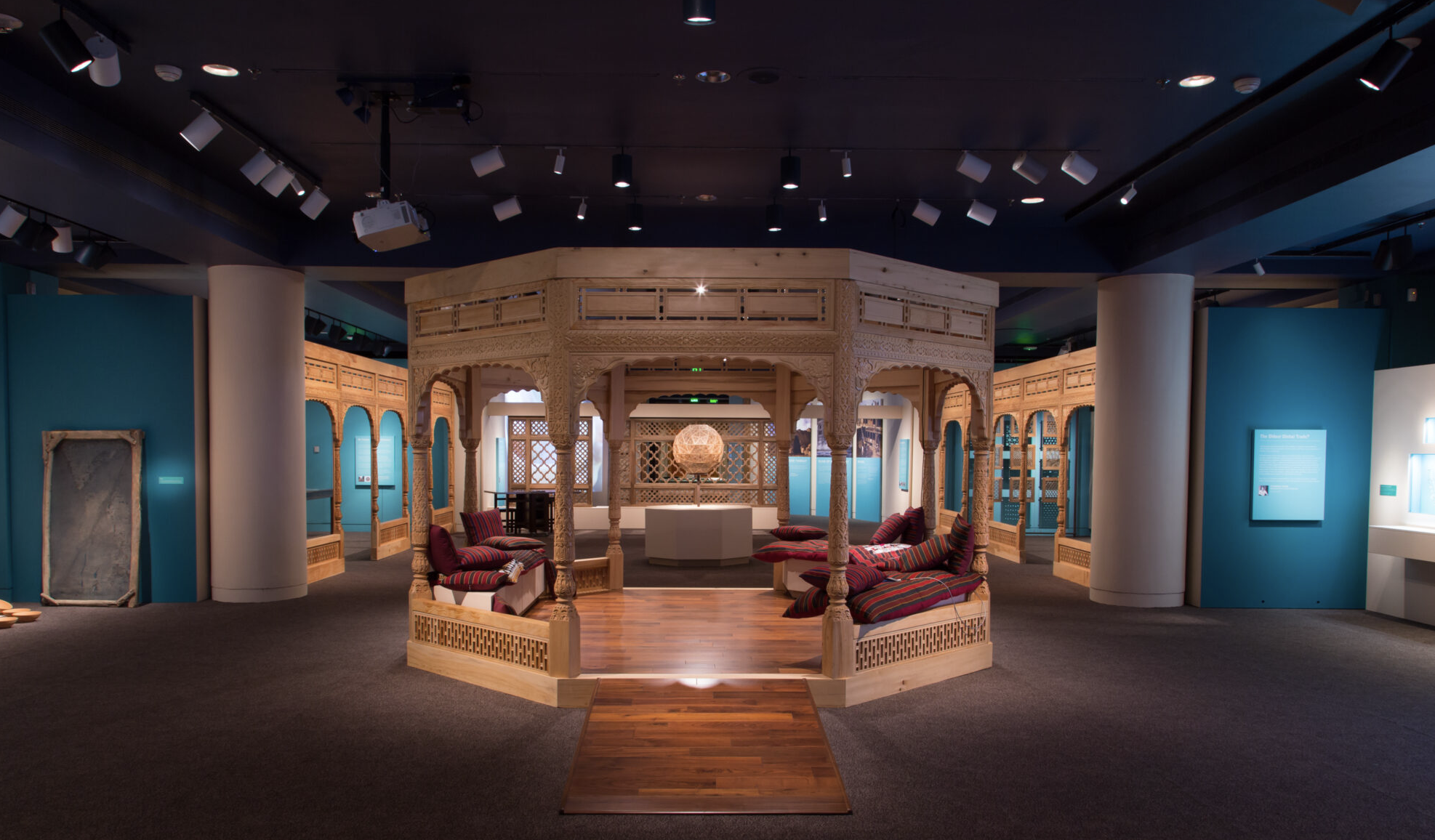
“Turquoise Mountain: Artists Transforming Afghanistan” at the Smithsonian Institution’s National Museum of Asian Art, 2016
Tracking The Trail of difference
In recent times, Wide has been working on a book on the 1960s counterculture’s “journey East” and its impact on contemporary culture. The book, provisionally titled The Trail, covers topics such as the rise of meditation, yoga, organic and whole foods, psychedelics and cannabis culture, fashion, and music. Wide believes it is “the engagement and encounter between a youth counterculture from Europe, America, and Australia, with what they viewed as the ‘East’ and burgeoning youth culture in Asia that led to the extraordinary cultural change that has shaped the world we live in today.”
Through researching the book, Wide has become increasingly interested in the idea of serendipity. He realises that the book can, in a sense, be viewed as a “paean to an age of serendipity, when the chance for really encountering difference, often by accident, was so much greater.”
Wide has interviewed over 300 people in multiple languages to inform his book. For one chapter, he used his Chinese language skills to explore the story of how Traditional Chinese Medicine became popular in America.
Wide is interested in the way personality can be shaped by contingent factors of language and culture. As a speaker of multiple languages, he can often feel that change in himself. “If you got a few of my friends together who each know me in a different language and asked “What is Tommy like?”, I think they would each give a different answer.” In Mandarin Chinese, Wide is “more light-hearted, a bit silly, making lots of jokes”; in Arabic, he is very formal (possibly due to having learnt a very formal version of Arabic); in Dari, Wide is respectful and humble, introducing markers such as putting a hand on his chest and nodding and stooping down – “motions I don’t think I have ever done outside of Afghanistan!”. Wide finds he “inevitably shape[s] [himself] to the different cultures [he is] in”.
Thinking back to his life and the serendipitous moments that have shaped his own journey, Wide attributes a chance encounter with a paperback – Rory Stewart’s The Places In Between, given to him by a friend in Damascus in 2005 — as having influenced his move to Afghanistan in the first place. “What has given human life so much of its spice is serendipity: the accidental connection and meeting.” It is through these encounters with one another and understanding (or not understanding) each other that we may start to learn what makes us different, and what makes us the same.
Thomas Wide’s website.
The Trail will be published in 2026 by Farrar, Straus & Giroux in the United States, Penguin Allen Lane in the United Kingdom, and multiple publishers across Europe.
Photos provided by Thomas Wide.